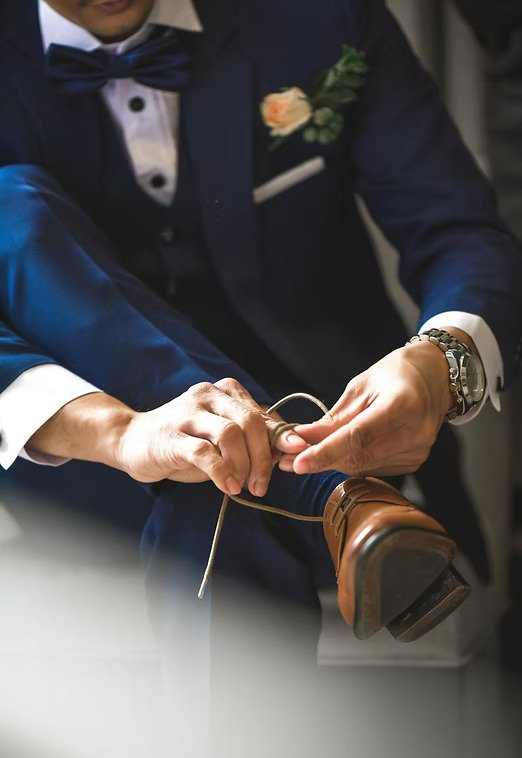
Most men have a suit hanging in their closet that they secretly dread wearing. Maybe it was bought off the rack for a cousin’s wedding five years ago, or grabbed during a desperate department store trip before a sudden job interview.
You pull it on, zip it up, and immediately start making adjustments in the mirror. The shoulders are a little too boxy, the sleeves swallow your wrists, and the trousers pool awkwardly over your dress shoes. You end up spending the entire evening tugging at your lapels, feeling like you’re wearing someone else’s clothes.
Now, imagine the opposite experience.
You put on a jacket that actually maps the contours of your spine, hugs your chest without pulling, and features sleeves cut to show just the right sliver of shirt cuff. The trousers break cleanly and comfortably over your shoes, making you stand taller without even trying.
This isn’t just about looking sharp. It’s about a psychological shift. When clothing is built exclusively for your body, the friction disappears. That is the power of owning at least one custom suit—whether bespoke or made-to-measure—and why it is the single best sartorial investment a man can make.
The Off-the-Rack Illusion
Retail clothing stores are built around a fundamental compromise: mass production. To sell a jacket to the greatest number of men possible, manufacturers rely on standardized blocks based on average measurements.
The catch? Very few human beings are average.
You might have broad shoulders from years of swimming, but a lean waist. Or perhaps you have one shoulder slightly lower than the other—a completely normal asymmetry that off-the-rack jackets will stubbornly ignore, resulting in unsightly bunching of fabric near your neck.
When you buy a standard suit, you are paying for an average fit. Even if you take that suit to a local tailor for alterations, they can only do so much with the seams and fabric available. They can shorten a sleeve or take in the waist, but they cannot rewrite the architecture of the garment.
Custom clothing flips this entire script. Instead of forcing your body to adapt to the clothes, the clothes adapt to you.
Bespoke vs. Made-to-Measure: What’s the Difference?
Before diving into a custom purchase, it helps to understand the terminology. While both routes result in a garment made specifically for you, the processes are quite distinct.
Made-to-Measure (MTM)
Think of MTM as a highly sophisticated customization process. A clothier takes your measurements and uses them to modify an existing master pattern. You get to choose the fabric, lining, buttons, and lapel style. MTM is efficient, highly reliable, and usually hits the sweet spot for price and turnaround time.
Bespoke
The word «bespoke» comes from the historical practice of fabric being «spoken for.» This is the gold standard of tailoring. A bespoke suit is built completely from scratch. The tailor drafts a unique paper pattern entirely for your body. It involves multiple fittings where the garment is literally basted together with white thread, allowing the tailor to sculpt the fit millimeter by millimeter. It requires patience and a higher budget, but the result is a wearable work of art.
Why One Great Suit Beats Five Mediocre Ones
A common trap is buying quantity over quality. Three cheap suits from a fast-fashion retailer might seem like a better deal than investing a lump sum into a single custom piece.
In reality, cheap suits wear out quickly. The synthetic blends pill, the fused interlinings bubble after a few trips to the dry cleaner, and the silhouette looks dated in two years.
A high-quality custom suit, crafted from durable wool, cotton, or linen, tells a completely different story.
- Longevity: Classic proportions never go out of style. A well-made custom suit, kept in neutral colors like navy or charcoal, will look just as sharp a decade from now as it does today.
- Versatility: Because the fit is immaculate, you don’t have to wear the suit only as a uniform. You can wear the jacket with dark denim and loafers for a dinner date, or pair the trousers with a crisp knit polo in warmer weather.
- Cost Per Wear: A $1,000 suit worn 30 times a year costs about $33 per wear. A $300 suit that you hate wearing and leave hanging in the dark costs infinitely more because it brings zero value to your life.
The Search for Quality: Finding the Right Clothier
If you live in a major metropolitan area, you have access to some incredible talent. For instance, men searching for the best custom suits Los Angeles has to offer will find everything from traditional tailoring houses rooted in Old World craftsmanship to modern, mobile clothiers who will bring fabric swatches straight to your office.
When shopping for your first custom suit, keep a few things in mind:
- Be Honest About Your Lifestyle: Don’t order a heavy, structured charcoal English wool suit if you live in a warm climate or work in a creative industry where ties are extinct. Tell your clothier how you actually live. If you travel frequently, look for resilient, high-twist fabrics that resist wrinkling.
- Start Classic: For your first custom garment, resist the urge to buy a bright emerald green check or velvet lapels. Stick to navy blue or medium-to-dark charcoal gray. These shades serve as chameleons, taking you seamlessly from boardroom meetings to weddings and evening events.
- Trust the Expert, But Speak Up: A good custom clothier acts as a consultant. They will tell you if a certain lapel width throws off your proportions. However, remember that you are the one wearing it. If a jacket feels too tight across the chest or you prefer a slightly higher trouser rise, speak up during the fitting.
Frequently Asked Questions
How much should I expect to spend on a custom suit?
Prices vary wildly based on the region, the prestige of the maker, and most importantly, the origin of the fabric (Italian and English mills command a premium). Generally, entry-level made-to-measure suits start around $800 to $1,200, while bespoke garments usually begin at $2,000 and climb upward based on handwork and luxury materials.
How long does the process take?
For a made-to-measure suit, expect a turnaround time of 4 to 6 weeks. A fully bespoke suit takes longer—often 8 to 12 weeks—due to the multiple physical fittings required to construct the garment from scratch.
Do I need to lose weight before getting measured?
This is the most common myth in tailoring. Do not wait until you hit your «ideal weight» to get measured. Get measured now, exactly as you are today. A good tailor can easily account for minor weight fluctuations, and wearing clothes that fit your current body actually motivates you far more than staring at an overly tight suit in the closet.
The Final Stitch
We live in an era of casual clothing, where sweatpants and hoodies have crept into daily wear. That makes the choice to dress well an intentional statement.
When you slip into a suit built exclusively for your frame, something shifts in your posture. You walk differently. You command a room effortlessly because you aren’t distracted by how your clothes feel.
You don’t need a closet stuffed with dozens of mediocre garments. You just need one exceptional suit that fits you like a glove. It is an investment in your confidence, your professional presence, and your personal style that will pay dividends for years to come.
Deja una respuesta